
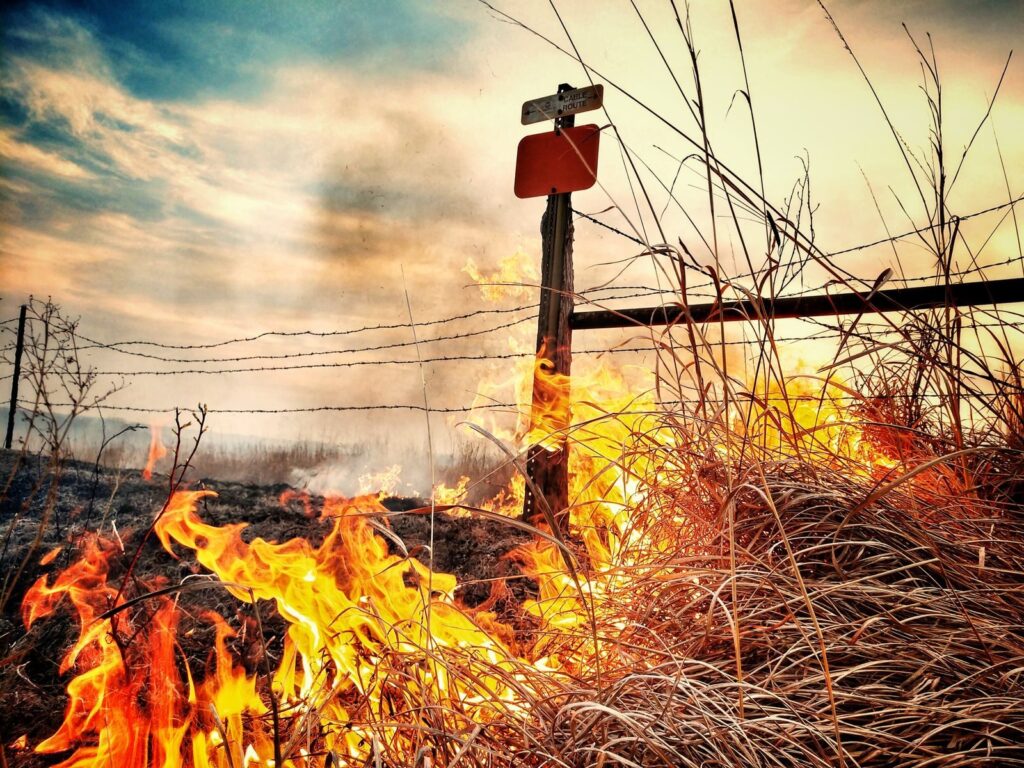
With much of East Texas under burn bans and hot, dry conditions increasing wildfire danger, residents are being warned to think about more than campfires and brush piles. A discarded cigarette may be enough to start a wildfire.
Research from the U.S. Forest Service provides scientific evidence that so-called “fire-safe” cigarettes can ignite natural vegetation and continue smoldering even after the cigarette itself appears to have gone out.
The study, published in Fire Technology in 2025, examined whether fire-safe cigarettes could ignite wildland fuels such as pine needles and peat. Researchers Sara S. McAllister, Stephen Williams and Ian Grob conducted controlled experiments using cigarette butts placed on beds of pine needles and peat under conditions designed to simulate outdoor environments.
The results are particularly important for East Texas, where pine forests and layers of dry needles can provide readily available fuel during periods of drought.
Researchers observed smoldering ignition in nearly every test. More importantly, the fire did not necessarily stop when the cigarette appeared to self-extinguish. Smoldering continued through the surrounding material and could spread well away from the original cigarette. The researchers concluded that fire-safe cigarettes can still start wildland fires, particularly when conditions are dry and windy.
The term “fire-safe” can be misleading. Cigarettes sold in the United States are required to meet standards intended to reduce their ability to start fires. They are designed to self-extinguish under certain conditions. But the Forest Service research demonstrates that self-extinguishing does not necessarily mean incapable of igniting natural fuels.
That distinction matters right now.
Most of East Texas was placed under burn bans as officials responded to hot, dry weather and increasing wildfire danger. Local officials consider factors including rainfall, humidity, wind and the condition of vegetation when determining whether restrictions are necessary.
The Texas Department of Insurance also warns that many wildfires begin with human carelessness and advises residents to avoid burning during dry and windy conditions. The agency directs Texans to check local restrictions and the Texas A&M Forest Service burn-ban map before conducting outdoor burning.
A cigarette discarded beside a roadway, into dry grass, or onto a forest floor may look harmless. But a glowing ember does not have to produce a visible flame immediately. The Forest Service experiments demonstrate how a cigarette can initiate a slow-burning process that moves through dry vegetation before becoming obvious.
For people living in East Texas, the message is simple: during a burn ban, every potential ignition source matters.
That means cigarette butts should never be tossed from a vehicle window or dropped onto the ground. Smoking materials should be completely extinguished and placed in a proper container designed to hold them safely.
Wildfires do not always begin with a dramatic flame. Sometimes they begin with a tiny ember, hidden beneath dry needles, quietly smoldering until wind and fuel turn it into something much larger.
In current East Texas conditions, that small ember can have consequences far beyond the person who dropped it.
Source: McAllister, S.S., Williams, S., & Grob, I. (2025). Can “fire safe” cigarettes (FSCs) start wildfires? Fire Technology. DOI: 10.1007/s10694-025-01699-w.
Image note: the photo on this story is a stock image.